
Tart Cherry Juice for Athletes: Recovery, Sleep & Performance Benefits


What Makes Tart Cherries So Powerful?

Tart cherry juice for athletes is one of the most well-researched natural recovery tools available and it's one that many competitors are yet to discover. Used for decades to manage gout and osteoarthritis, tart cherries are now gaining serious attention in sports science for their ability to accelerate muscle recovery, reduce inflammation, improve sleep quality and enhance multi-day performance.

Here at Athlete Sanctuary, we're passionate about evidence-based natural medicine, and tart cherry juice ticks every box.

Tart cherries are rich in bioactive phytochemicals

  • Anthocyanins — potent anti-inflammatory and antioxidant compounds
  • Flavonoids and flavanols
  • Phenolic acids

Tart cherries contain a significantly higher anthocyanin content than sweet cherries, along with an impressive nutritional profile: potassium, calcium, iron, magnesium, and vitamins A, C, B6, E and folate. Some sources suggest tart cherries contain up to 19 times more vitamin A and beta-carotene than strawberries and blueberries.

Does the evidence stack?

Repeat Sprint Recovery

A 2016 study involving soccer players found that tart cherry juice significantly accelerated recovery following prolonged, repeat sprint activity — movement patterns common across soccer, AFL and rugby. Researchers concluded that polyphenol-rich foods such as tart cherry juice are effective in supporting recovery from various forms of strenuous exercise. [2]

Marathon Running — Strength, Inflammation & Antioxidant Status

A 2010 study of recreational runners competing in the London Marathon found that supplementing with tart cherry juice twice daily for 5 days before and 2 days after the race led to: [3]

  • Improved muscle strength recovery
  • Reduced inflammatory markers and uric acid
  • 10% greater total antioxidant status
  • Lower oxidative stress compared to placebo

Back-to-Back Performance

Studies involving trained cyclists demonstrated significant benefits from Montmorency tart cherry concentrate across 3 days of 109-minute road cycling races, taken twice daily for 7 consecutive days. Researchers observed reduced oxidative stress, inflammation and muscle damage, concluding that tart cherry juice has direct application for athletes competing in back-to-back events. [1]

Next-Day Performance

A 2016 study of well-trained water polo players found that tart cherry juice supplementation supported recovery and improved next-day performance, further reinforcing its application across team and multi-day sport formats. [4]

How Tart Cherry Juice Supports Recovery

Tart cherry juice works through four key mechanisms:

1. Reduces muscle damage. Lowers creatine kinase (CK) — a pathology marker for muscle breakdown. [2] [3]

2. Reduces inflammation. Studies show reductions in IL-6, TNF-α, IL-8, IL-1-β and CRP — key markers of systemic inflammation. [1] [2] [3]
3. Reduces oxidative stress. With an ORAC rating of 12,800, tart cherries rank among the highest antioxidant foods in the world. [1]

4. Improves sleep quality- Tart cherries naturally increase tryptophan and melatonin levels, supporting deeper, more restorative sleep which is an athlete's most powerful recovery tool.

How to Use Tart Cherry Juice for Recovery and Sleep

Tart cherry juice is best used strategically, not daily. It is most beneficial during:

  • Multi-day competitions (rugby, AFL or touch football tournaments)
  • Marathon or ultramarathon events
  • Multi-day cycling events or triathlons
  • Intense training blocks or back-to-back training days

Note: Consistent daily use during a training/adaptation phase is not recommended, as anti-inflammatory compounds may blunt the training stimulus your body needs to adapt and improve.

Recommended Protocol

  • Dose: 30ml of tart cherry concentrate diluted in 100ml of water — equivalent to approximately 60–90 cherries per serve
  • Frequency: Twice daily (morning and evening)
  • Timing: Evening dose ideally taken 1 hour before bed to support melatonin production and sleep quality
  • Duration: Begin 2–3 days post-event or strenuous session

What About a Pre-Loading Phase?

Some studies have used a 4–5 day pre-loading phase prior to competition. However, current evidence does not clearly confirm that the active compounds accumulate in the body over multiple days, so the necessity of pre-loading remains uncertain. More large-scale athlete trials are needed. [2] [3]

What to Look For When Buying Tart Cherry Juice

Not all tart cherry products are equal. Here's what to consider:

  • Variety: Look for Montmorency or Balaton tart cherry varieties — these are the most studied. Montmorency is more widely available in Australia.
  • Cold-pressed: Anthocyanins are heat-sensitive, so choose products that are cold-pressed to maximise bioactive compound retention. [5]
  • Sugar content: Most juices contain around 25g of sugar per 250ml, but at 30ml per serve, you're only consuming approximately 3g of sugar — not a concern for most athletes. Low-sugar options with stevia or vanilla extract are available.
  • Price: Expect to pay $26–$28 AUD for quality organic tart cherry juice (450–950ml). Budget options from chemists or supermarkets are less likely to be cold-pressed.
  • Label check: Confirm the bottle specifically states the cherry variety used.

Tart cherry juice is an accessible, evidence-backed natural tool that may meaningfully support your recovery when used at the right time. Like all nutritional strategies, targeted, moderate use is far more likely to deliver results than overconsumption or uninformed daily use.

  1. Bell, P.G.; Walshe, I.H.; Davison, G.W.; Stevenson, E.; Howatson, G. (2014).Montmorency Cherries Reduce the Oxidative Stress and Inflammatory Responses to Repeated Days High-Intensity Stochastic Cycling. Nutrients, 6, 829-843.
  2. Bell, P. G., Stevenson, E., Davison, G. W., & Howatson, G. (2016). The effects of montmorency tart cherry concentrate supplementation on recovery following prolonged, intermittent exercise. Nutrients, 8(7), 441.
  3. Howatson G, McHugh MP, Hill JA, et al. (2010). Influence of tart cherry juice on indices of recovery following marathon running. Scand. J. Med. Sci. Sports 20:843–52.
  4. McCormick, R., Peeling, P., Binnie, M., Dawson, B., & Sim, M. (2016). Effect of tart cherry juice on recovery and next day performance in well-trained Water Polo players. Journal of the International Society of Sports Nutrition, 13(1), 41.
  5. Szalóki-Dorkó, L., Végvári, G., Ladányi, M., Ficzek, G., & Stéger-Máté, M. (2015). Degradation of anthocyanin content in sour cherry juice during heat treatment. Food technology and biotechnology, 53(3), 354-360.
  6. Vitale, K. C., Hueglin, S., & Broad, E. (2017). Tart cherry juice in athletes: a literature review and commentary. Current Sports Medicine Reports, 16(4), 230-239.
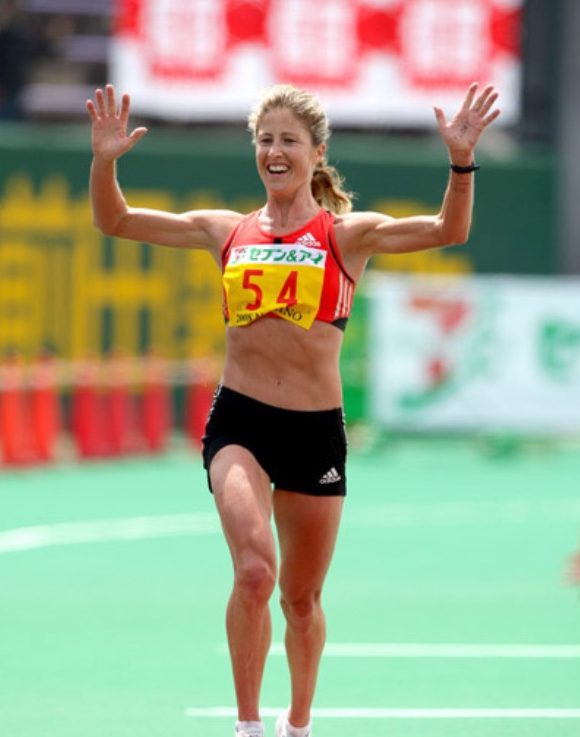
Photo of Kate Smyth running across the line as she finishes the Nagano marathon in 2008.

About the Author

Kate Smyth is a sports naturopath, nutritionist and female-centric running coach. She is the founder of the Athlete Sanctuary - a holistic healthcare clinic for athletes of all levels and sporting codes.

Kate has a thirst for knowledge, with two bachelor's and a master’s degree under her belt. She has been involved in sports for many decades and competed for Australia in the Commonwealth Games and Olympic Games marathons with a personal best time of 2 hours 28 minutes.

About Kate Smyth

From Olympian to Practitioner & Coach

Kate’s path into high‑performance sport didn’t follow the traditional script. A late bloomer and recreational runner, she found her spark during the Sydney 2000 Olympics, watching her idols surge into the stadium. That moment ignited a commitment that would quietly and profoundly reshape the course of her life.

Eight years later, she realised her own Olympic dream, representing Australia in the women’s marathon at the 2008 Beijing Olympic Games.

Her running career spanned the Commonwealth Games, multiple Australian representative teams, and national‑level competition across cross‑country, track, and road racing. With a marathon personal best of 2:28, Kate was one of Australia’s all time fastest female marathoners.

But her journey was far from linear. Significant health challenges forced her to question conventional medicine, sports nutrition and traditional training models. What felt like setbacks at the time became turning points, pushing her to explore deeper, listen more closely to her body, and ultimately develop a more sustainable, female‑centred approach to performance.

These experiences now form the foundation of the work she shares with other women: how to train smarter, nourish deeply, honour physiology, and build resilience from the inside out.

She holds three degrees including a Masters and Bachelor of Health Science (Naturopathy). Kate is an accredited athletics coach with Athletics Australia and a member of NHAA.

Kate’s expertise is widely recognised, leading to regular invitations to speak on podcasts, at seminars, within industry education forums, and across corporate and women’s health initiatives.

Kate Smyth has been featured on

Not quite sure exactly what you need right now. Let's chat