
You train consistently. You watch what you eat. Your shirt still fits. By most appearances, you're in great shape. But here's the uncomfortable truth that science is now making impossible to ignore: looking healthy and being metabolically healthy are two very different things.
Research published in the CardioMetabolic Syndrome Journal found that up to 30% of normal-weight individuals are metabolically unhealthy, carrying the same hidden cardiometabolic risk factors as those with obesity, including reduced insulin sensitivity, excess visceral (central) fat, and elevated cardiovascular risk markers. This can carries a 3–4x higher risk of type 2 diabetes and cardiovascular disease compared to metabolically healthy lean individuals.
Metabolic syndrome can start to appear as a cluster of elevated fasting glucose, high triglycerides and cholesterol, high blood pressure, and central obesity. This process can be quietly progressing for years before it shows up on the bathroom scales.
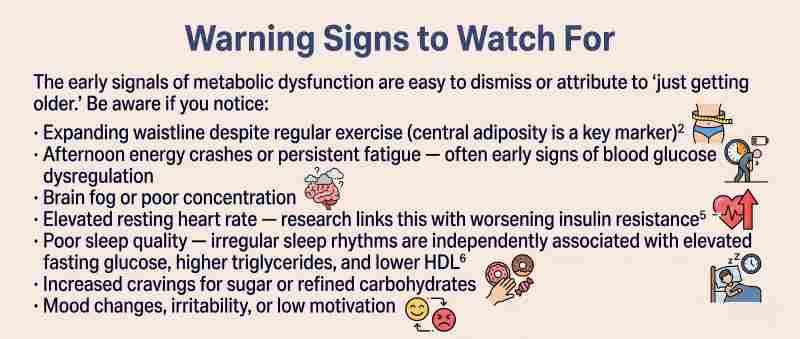
From around age 35, men experience a gradual decline in testosterone of approximately 1–2% per year. By midlife, this hormonal shift matters metabolically: testosterone plays a direct role in insulin sensitivity, lean muscle mass, and lipid metabolism.
Testosterone deficiency is strongly associated with metabolic syndrome, with hypogonadism rates reaching up to 50% in men with type 2 diabetes. Lower testosterone means less metabolic efficiency even if you're still training well.
Add in the chronic low-grade inflammation of modern life, disrupted sleep, and decades of dietary patterns that may not suit your specific genetic profile, and the picture becomes clear.
Get checked
You've invested in your fitness. Now invest in your longevity. A comprehensive metabolic health review takes less time than a training session and gives you data that could change the trajectory of the next 30 years.
A thorough metabolic blood panel goes beyond standard cholesterol checks. At Athlete Sanctuary, we consider metabolic markers such as:
Here's what makes personalised metabolic care genuinely different: not all metabolic risk is created equal, and not all diets work the same way for every person.
Nutrigenomics confirms dietary interventions are more precise and beneficial when customised to a person's genetic profile.
Through our comprehensive DNA genetic testing, we can identify genetic variants that influence how your body processes carbohydrates, fats, caffeine, vitamins, and inflammatory foods. Our report covers 92 genes covering areas such as digestion, energy production, athletic performance, hormones, detoxification, inflammation, stress and cognitive function and more.
This means we can tailor your nutrition plan not to a generic template, but to
your actual biology. We can also identify genetic predispositions to certain conditions giving you a powerful, proactive roadmap aligned with preventative medicine, well ahead of a clinical diagnosis.
ACT NOW
We'll run your full metabolic blood panel, review your signs and symptoms, and where indicated, integrate genetic testing to give you a truly personalised health strategy, one built around who you actually are, not who you're assumed to be.
Honka, M. J., & Kostara, C. E. (2024). Biomarkers of insulin sensitivity/resistance. Therapeutic Advances in Endocrinology and Metabolism, 15, 1–28.
Li, X., Wang, Y., Yang, Z., Xie, J., & Wang, L. (2025). Evaluating the impact of metabolic syndrome on aging in US adults: A cross-sectional study from NHANES. Frontiers in Public Health, 13, Article 1593214.
Nour, M., Lutze, S. A., Heinnonen, A., & Rangan, A. (2024). The metabolically unhealthy normal weight phenotype and cardiometabolic risk. CardioMetabolic Syndrome Journal, 4, e13.
Ponce, O. J., et.al (2025). Understanding the secular decline in testosterone: Mechanisms, consequences, and clinical perspectives. International Journal of Molecular Sciences, 27(2), 692.
Ramos-Lopez, O., et. al (2024). Personalized nutrition: Tailoring dietary recommendations through genetic insights. Nutrients, 16(16), 2673.
Rimbach, G., Fischer, A., Düring, H., Prehn, C., Adamski, J., & Marko, D. (2020). Genes and diet in the prevention of chronic diseases in future generations. Microorganisms, 8(2), 200.
Sizar, O., Leslie, S. W., & Schwartz, J. (2024). Male hypogonadism. In StatPearls. StatPearls Publishing.
Szczepanska, E., & Bonikowski, P. (2025). Nutrigenomics meets multi-omics: Integrating genetic, metabolic, and microbiome data for personalised nutrition strategies. Genes & Nutrition, 20, Article 790.
Toapanta, N., & Hernandez-Fuentes, M. P. (2025). The triglyceride-glucose index as a predictor of metabolic syndrome and insulin resistance: A systematic review and meta-analysis. Frontiers in Endocrinology, 16, Article 1520303.
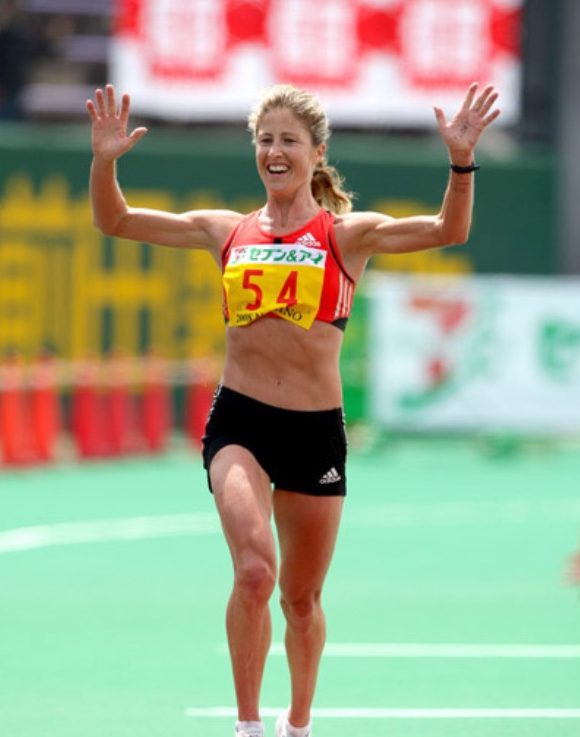
Kate Smyth is a sports naturopath, nutritionist and female-centric running coach. She is the founder of the Athlete Sanctuary - a holistic healthcare clinic for athletes of all levels and sporting codes.
Kate has a thirst for knowledge, with two bachelor's and a master’s degree under her belt. She has been involved in sports for many decades and competed for Australia in the Commonwealth Games and Olympic Games marathons with a personal best time of 2 hours 28 minutes.
Kate’s path into high‑performance sport didn’t follow the traditional script. A late bloomer and recreational runner, she found her spark during the Sydney 2000 Olympics, watching her idols surge into the stadium. That moment ignited a commitment that would quietly and profoundly reshape the course of her life.
Eight years later, she realised her own Olympic dream, representing Australia in the women’s marathon at the 2008 Beijing Olympic Games.
Her running career spanned the Commonwealth Games, multiple Australian representative teams, and national‑level competition across cross‑country, track, and road racing. With a marathon personal best of 2:28, Kate was one of Australia’s all time fastest female marathoners.
But her journey was far from linear. Significant health challenges forced her to question conventional medicine, sports nutrition and traditional training models. What felt like setbacks at the time became turning points, pushing her to explore deeper, listen more closely to her body, and ultimately develop a more sustainable, female‑centred approach to performance.
These experiences now form the foundation of the work she shares with other women: how to train smarter, nourish deeply, honour physiology, and build resilience from the inside out.
She holds three degrees including a Masters and Bachelor of Health Science (Naturopathy). Kate is an accredited athletics coach with Athletics Australia and a member of NHAA.
Kate’s expertise is widely recognised, leading to regular invitations to speak on podcasts, at seminars, within industry education forums, and across corporate and women’s health initiatives.