
Seed Cycling

Seed cycling and hormones

Before we get stuck into the detail, let’s do a quick recap on how seed cycling supports hormones.

Female hormones are regulated through complex signalling and feedback mechanisms. Signals are received and then transmitted by the hypothalamus part of the brain out to the pituitary gland, adrenal glands and then ovaries (the HPAO axis). In times of change or increase physical or emotional stress of any kind, the HPOA axis can become dysregulated.

Symptoms such as longer or irregular menstrual cycles, hot sweats, increased PMS, mood changes, fatigue, changes in bleeding and reduced ability to handle training intensity may appear. These symptoms frequently occur when there is no known structural or functional issue with the ovaries.

In order to reduce symptoms, some women reach for pharmaceutical medications without understanding or being aware they have the potential to further dysregulate long-term hormonal balance and deplete nutrients such as zinc and magnesium.

In addition to medicinal herbs such as Chaste Tree, Schisandra, Kudzu or Rhodiola, seed cycling may provide subtle hormonal support by boosting estrogen levels in the first part of the cycle and progesterone levels in the second part without the possible side effects of other medications.

THE PROCESS

Seed cycling supports hormones by providing nutrient-rich foods in the form of seeds at different times of the menstrual cycle.

How to seed cycle

Preparation: Combine ¼ cup of each of the following seeds nominated to the two phases of your cycle. Take your seeds (according to which phase of your cycle you are in) and whiz them in a coffee grinder to break the seeds down into a meal-like consistency.  Make 2 separate jars of seeds.

  • Follicular phase: day 1-14 of your cycle (or until ovulation)= flaxseed + pepitas  (pumpkin seeds)
  • Luteal phase: day 15-28 of your cycle (or post ovulation) = sesame + sunflower seeds

Dose: 1-2 tablespoons of combined ground seeds daily.

How: Add seeds to smoothies, on top of breakfast oats, avocado toast, coconut yogurt or as a garnish on savoury soups, salads or scrambled eggs.  Seed cycling biscuits or brownie mixes are also a great option. Choose whole, organic seeds instead of pre-ground seeds where possible.

Storage: Store ground seeds in an air-tight jar in the fridge to preserve their essential fatty acids from oxidation.
Duration: Most women need to allow 3-4 cycles before expecting changes to occur.

An easy way to ensure you have the right seeds across the month is to purchase a seed cycling kit.
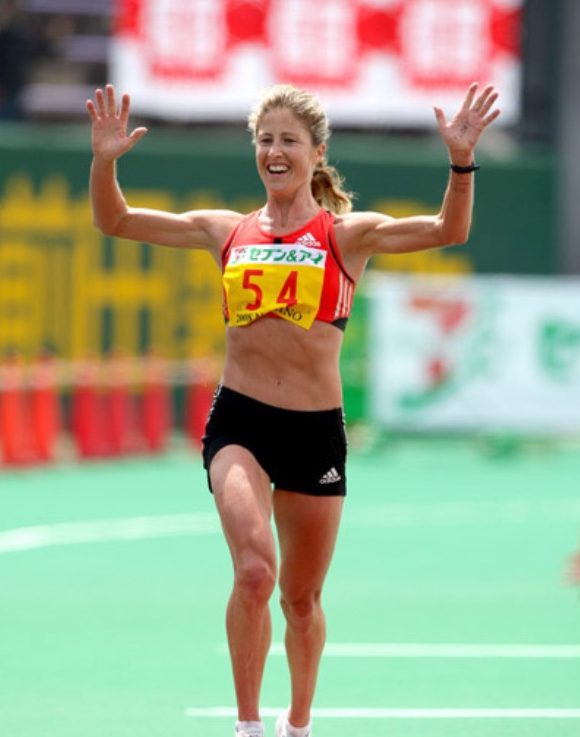

Photo of Kate Smyth running across the line as she finishes the Nagano marathon in 2008.

About the Author

Kate Smyth is a sports naturopath, nutritionist and female-centric running coach. She is the founder of the Athlete Sanctuary - a holistic healthcare clinic for athletes of all levels and sporting codes.

Kate has a thirst for knowledge, with two bachelor's and a master’s degree under her belt. She has been involved in sports for many decades and competed for Australia in the Commonwealth Games and Olympic Games marathons with a personal best time of 2 hours 28 minutes.

Photo of Kate Smyth running across the line as she finishes the Nagano marathon in 2008.

About the Author

Kate Smyth is a sports naturopath, nutritionist and female-centric running coach. She is the founder of the Athlete Sanctuary - a holistic healthcare clinic for athletes of all levels and sporting codes.

Kate has a thirst for knowledge, with two bachelor's and a master’s degree under her belt. She has been involved in sports for many decades and competed for Australia in the Commonwealth Games and Olympic Games marathons with a personal best time of 2 hours 28 minutes.

About Kate Smyth

From Olympian to Practitioner & Coach

Kate’s path into high‑performance sport didn’t follow the traditional script. A late bloomer and recreational runner, she found her spark during the Sydney 2000 Olympics, watching her idols surge into the stadium. That moment ignited a commitment that would quietly and profoundly reshape the course of her life.

Eight years later, she realised her own Olympic dream, representing Australia in the women’s marathon at the 2008 Beijing Olympic Games.

Her running career spanned the Commonwealth Games, multiple Australian representative teams, and national‑level competition across cross‑country, track, and road racing. With a marathon personal best of 2:28, Kate was one of Australia’s all time fastest female marathoners.

But her journey was far from linear. Significant health challenges forced her to question conventional medicine, sports nutrition and traditional training models. What felt like setbacks at the time became turning points, pushing her to explore deeper, listen more closely to her body, and ultimately develop a more sustainable, female‑centred approach to performance.

These experiences now form the foundation of the work she shares with other women: how to train smarter, nourish deeply, honour physiology, and build resilience from the inside out.

She holds three degrees including a Masters and Bachelor of Health Science (Naturopathy). Kate is an accredited athletics coach with Athletics Australia and a member of NHAA.

Kate’s expertise is widely recognised, leading to regular invitations to speak on podcasts, at seminars, within industry education forums, and across corporate and women’s health initiatives.

Kate Smyth has been featured on

Not quite sure exactly what you need right now. Let's chat