
High Performance Isn’t an Accident - it’s a Practice
High performance in sport, health, and life isn’t luck. It’s not personality, talent, genetics or perfect timing. It’s a collection of habits, standards, and beliefs applied consistently, especially on the days when motivation is low and life feels full.
At the Athlete Sanctuary, we see this in the athletes and patients we support: athletes, mothers, professionals, and high‑achievers who want to feel strong, balanced, and capable. The same principles that underpin high performance apply to anyone who wants to achieve.
Below are 10 high‑performance characteristics
Women are notorious for servicing the needs of everyone else first and becoming chronically depleted. High‑performing women make decisions that in effect, "put their own oxygen mask on first" so they can have a balanced approach and yet still support others without overstepping their own capacity.
They ask: What supports my body, my energy, and my goals?
Women who prioritise recovery and self‑care experience up to 30% fewer overuse injuries and report higher performance satisfaction. When intent is clear, confidence follows and so does progress.
Curiosity is a performance enhancer.
Active women who continually learn and stay curious to new ways of training and supporting their bodies adapt faster and perform better.
Athletes who engage in ongoing skill development demonstrate higher motivation and improved long‑term adherence to training.
Success isn’t comparison it’s clarity. High‑performing women define what matters to them: sustained energy, progress, balance, resilience, and joy.
Women who set personally meaningful goals are more likely to maintain long‑term behaviour change.
Courage isn’t loud. It’s choosing rest when exhausted, fuelling properly when busy, speaking up when something feels off, and doing what’s right for your body even when shortcuts are tempting.
Psychological courage is linked to greater resilience and lower burnout.
High performers take ownership of their actions, habits, and outcomes.
They acknowledge external pressures, work, family, hormones, stress, but don’t let them become excuses and keep everything in perspective.
Those who adopt an internal locus of control show higher self‑efficacy and improved training consistency. Accountability builds momentum.
How you show up matters. Professionalism in work and sport means consistency, respect for your body, your support team and integrity in your choices.
Athletes who maintain high personal standards demonstrate better emotional regulation and performance stability.
Progress accelerates when communication is intentional. High‑performing individuals listen to their bodies, ask for support, and communicate clearly with coaches, practitioners, and loved ones.
Effective communication is associated with reduced stress, improved support team synergy and performance outcomes.
High performers think like leaders even within a team, family, or workplace.
They take ownership of their attitude, effort, and standards.
A leadership mindset results in higher confidence and improved decision‑making.
Busy is easy. Productive is powerful. High‑performers focus on the actions that matter most: sleep, nutrition, strength, recovery, consistent training and boundaries.
Focusing on high‑impact behaviours leads to significantly greater performance improvements than trying to change everything at once.
Time is a tool. Performing with intention involves responding promptly, making decisions, and building momentum.
Athletes who maintain consistent daily action (even small steps) experience higher motivation and reduced procrastination. Momentum compounds. Every small action counts.
High performance doesn’t come from luck, perfect timing, or natural motivation. It’s built through small, consistent choices.
At the Athlete Sanctuary, we see this every day in the patients and athletes we support: active women, mothers, professionals, and athletes who want to feel strong, balanced, and capable. Their progress isn’t random. It’s the result of clear standards, supportive habits, and a mindset that prioritises sustainable performance over quick wins.
Bartholomew, J. B., Ntoumanis, N., Ryan, R. M., & Thøgersen‑Ntoumani, C. (2009). Psychological need thwarting in the sport context: Assessing the darker side of athletic experience. Journal of Sport & Exercise Psychology, 31(2), 215–239.
Gardner, B., Lally, P., & Wardle, J. (2012). Making health habitual: The psychology of ‘habit‑formation’ and general practice. British Journal of General Practice, 62(605), 664–666.
Herrero, H., Salinero, J. J., & Del Coso, J. (2021). Injuries in female athletes: A systematic review. Sports Medicine, 51(4), 873–892.
McLaren, C. D., Newland, A., Eys, M., & Newton, M. (2017). Peer‑initiated motivational climate and group cohesion in youth sport. Journal of Applied Sport Psychology, 29(1), 88–100.
Moradi, J., Esmaeilzadeh, S., & Ghorbani, S. (2020). Locus of control and self‑efficacy in female athletes. Journal of Physical Education and Sport, 20(1), 123–129.
Ruiz, M. C., Robazza, C., Tolvanen, A., & Hanin, Y. (2017). The dynamics of emotional experience in sport. Psychology of Sport and Exercise, 29, 96–106.
Sarkar, M., & Fletcher, D. (2014). Psychological resilience in sport performers: A review of stressors and protective factors. International Review of Sport and Exercise Psychology, 7(1), 92–117.
Steel, P. (2007). The nature of procrastination: A meta‑analytic and theoretical review. Psychological Bulletin, 133(1), 65–94.
Teixeira, P. J., Carraca, E. V., Markland, D., Silva, M. N., & Ryan, R. M. (2012). Exercise, physical activity, and self‑determination theory: A systematic review. International Journal of Behavioral Nutrition and Physical Activity, 9(1), 78.
Voelker, D. K., Gould, D., & Crawford, M. J. (2019). Understanding leadership in female athletes. Women in Sport and Physical Activity Journal, 27(1), 1–10.
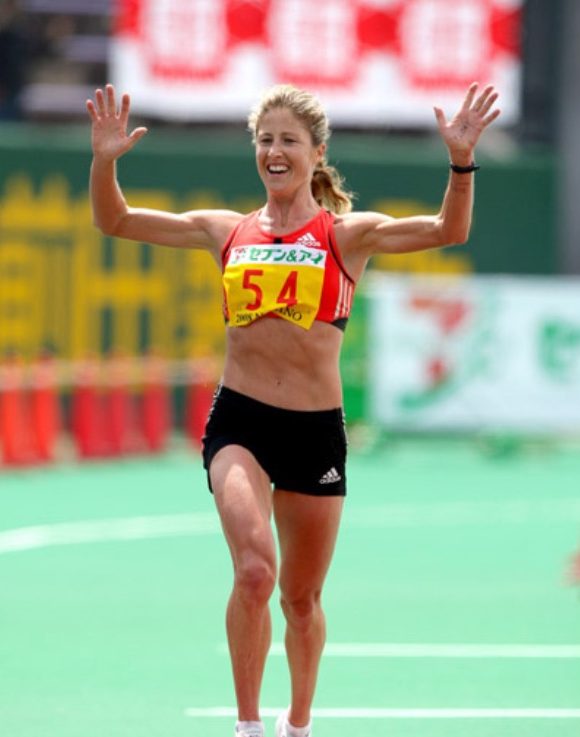
Kate Smyth is a sports naturopath, nutritionist and female-centric running coach. She is the founder of the Athlete Sanctuary - a holistic healthcare clinic for athletes of all levels and sporting codes.
Kate has a thirst for knowledge, with two bachelor's and a master’s degree under her belt. She has been involved in sports for many decades and competed for Australia in the Commonwealth Games and Olympic Games marathons with a personal best time of 2 hours 28 minutes.
Kate’s path into high‑performance sport didn’t follow the traditional script. A late bloomer and recreational runner, she found her spark during the Sydney 2000 Olympics, watching her idols surge into the stadium. That moment ignited a commitment that would quietly and profoundly reshape the course of her life.
Eight years later, she realised her own Olympic dream, representing Australia in the women’s marathon at the 2008 Beijing Olympic Games.
Her running career spanned the Commonwealth Games, multiple Australian representative teams, and national‑level competition across cross‑country, track, and road racing. With a marathon personal best of 2:28, Kate was one of Australia’s all time fastest female marathoners.
But her journey was far from linear. Significant health challenges forced her to question conventional medicine, sports nutrition and traditional training models. What felt like setbacks at the time became turning points, pushing her to explore deeper, listen more closely to her body, and ultimately develop a more sustainable, female‑centred approach to performance.
These experiences now form the foundation of the work she shares with other women: how to train smarter, nourish deeply, honour physiology, and build resilience from the inside out.
She holds three degrees including a Masters and Bachelor of Health Science (Naturopathy). Kate is an accredited athletics coach with Athletics Australia and a member of NHAA.
Kate’s expertise is widely recognised, leading to regular invitations to speak on podcasts, at seminars, within industry education forums, and across corporate and women’s health initiatives.